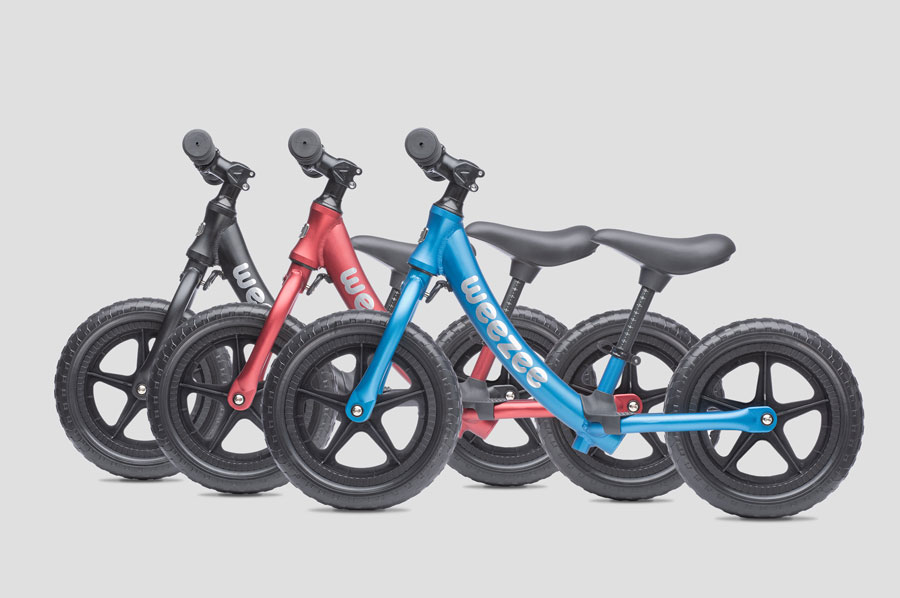
Do you remember how, as a child, you spent entire afternoons outdoors—running around the yard, climbing trees, and riding your bike? Today’s children often spend more time in front of screens than outside, which makes it even more important to encourage them to be active. This is where balance bikes and bicycles come into play—discover Weezee balance bikes that promote your child’s development in a fun way.
Movement is a source of fun and the foundation for healthy physical and mental development. It helps children learn new skills, build confidence, and improve concentration. Children who are regularly physically active tend to take on new challenges with ease, feel more confident, and have more energy for everyday activities.
In this article, you will learn:
Movement is crucial for a child’s development—every game, jump, walking on the curb, or bike ride encourages physical and mental abilities, strengthening coordination, balance, and confidence. Although it may seem like the child is just playing, they are developing many skills.

Movement influences:
Physically active children are often more focused when learning since movement positively impacts the brain and enhances concentration.
Many parents wonder when the right time is for a balance bike and when for a bicycle. There is no universal rule, as each child develops at their own pace.
Balance bikes are suitable from age 2, but if your little one isn’t interested, there’s nothing wrong with starting at 3 or 4. They must go at their own pace and feel safe while doing it. Once the child has mastered balance on a balance bike, a bicycle is usually the next step, around 4–6.
Children typically learn to ride a bicycle fastest if they have used a balance bike beforehand, which helps them actively work on their balance.
For more information on which balance bike to choose, read the Weezee guide. Don’t worry if your child isn’t interested at age two. Some children take to balance bikes immediately, while others prefer to start at four. The most important thing is that they feel comfortable and safe while riding.
Every child learns at their own pace—some are immediately excited, while others need more time and encouragement. To ensure your child will love their balance bike or bicycle, it’s essential that they feel safe, confident, and booming.
The first few meters are most manageable on flat, soft surfaces like grass or rubber playground tracks. If the child falls on a hard surface during their first attempts, they may quickly lose interest.
Tip: If the child is unsure, you can assist them by holding them under the armpits and walking alongside them.
Children learn through play, so you can turn learning to ride a balance bike or bicycle into an adventure.
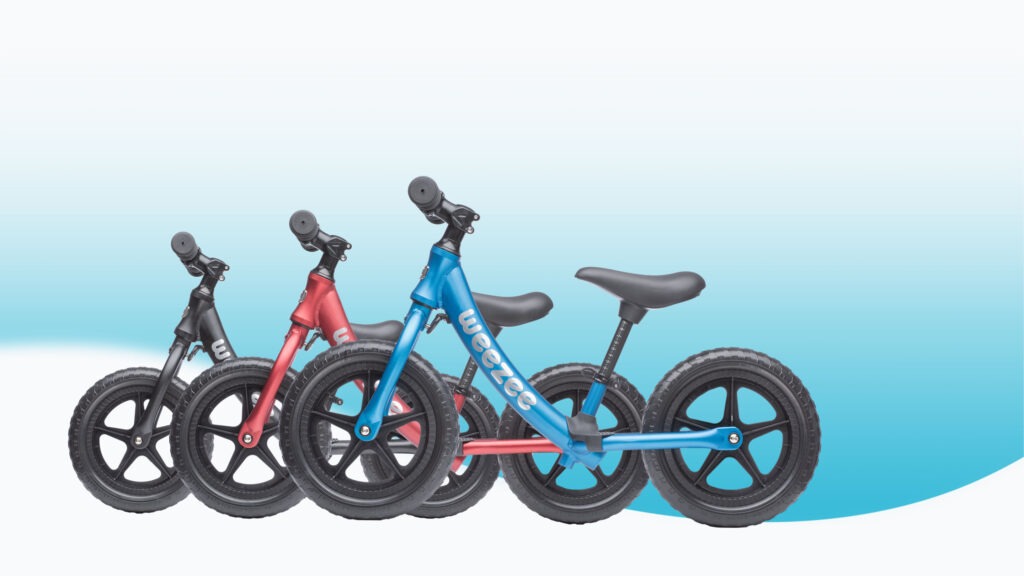
Once the child can confidently ride the balance bike, transitioning to a bicycle will be easier. If they know how to balance and ride without touching the ground, it’s a sign they’re ready for a bike with pedals.
Tip: Training wheels are not necessary as the child will confidently and effortlessly balance from the first ride..
Every child has their own learning pace, so it’s essential to support and encourage them as they master new skills. A balanced bike and a bicycle are excellent ways to introduce children to movement in a fun, relaxed, and natural way.
Let every ride be a new adventure full of laughter, exploration, and joy! By providing positive experiences, your child will look forward to movement and integrate it into daily life. This will give them happy moments and lay the foundation for a healthy and active lifestyle.

Alpox d.o.o.
Tovarniška cesta 6
3210 Slovenske Konjice Slovenia
