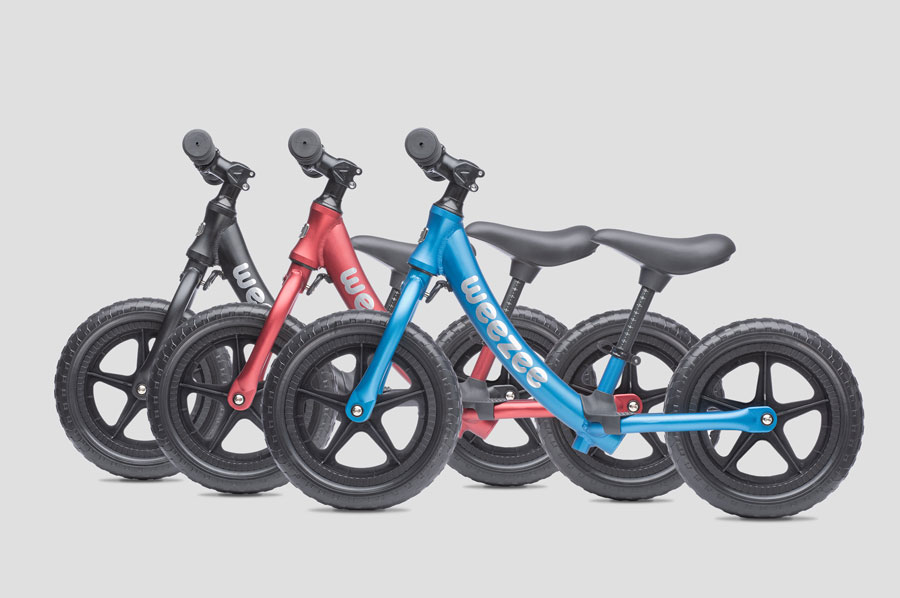
When parents choose the first mode of transportation for their toddler, they often face a dilemma: Is a balance bike really a good choice, or should they place their child directly on a bicycle with training wheels?
Balance bikes are popular, but many misconceptions surround them. Before making a purchase, parents often wonder if they’re truly necessary or if it’s better to start with a bicycle. They’ve also heard that balance bikes might not suit all children.
There’s no specific age at which a child should start using a balance bike, as development varies among children. Most kids begin riding around the age of 2 and continue until they’re 5 or 6, depending on the bike’s size and the child’s motor skills.
Best Choice: It’s advisable to select a balance bike with an adjustable seat height. This feature allows the bike to grow with your child, ensuring a comfortable ride. A well-chosen model will serve your child for years and ease their transition to a regular bicycle.
If you’re seeking a quality and adaptable balance bike, explore Weezee’s range, which offers adjustable seats tailored to various age groups.

Balance bikes have gained immense popularity, but several myths cause unnecessary concern among parents. Let’s debunk them!
MYTH #1: Balance bikes hinder a child’s walking development.
TRUTH: Balance bikes don’t impede walking; they enhance it. Children using balance bikes develop better body control and transition to regular bicycles more smoothly.
MYTH #2: Balance bikes are dangerous.
TRUTH: Balance bikes are safe when appropriately sized and used on suitable terrain. It’s always recommended that children wear helmets.
MYTH #3: A child should start with a bicycle with training wheels.
TRUTH: Training wheels don’t teach balance; they prevent active body control. Balance bikes allow children to learn balancing skills naturally.
MYTH #4: Balance bikes are only helpful for a few months before the child outgrows them.
TRUTH: Quality balance bikes, like Weezee’s, feature adjustable seats that accommodate a child’s growth, making them usable for several years.
MYTH #5: Balance bikes are just a passing trend.
TRUTH: Balance bikes have been around for decades and are among the most effective tools for preparing children for cycling. Many pediatricians and developmental experts endorse their use.
Children learn best through play. Transforming balance bike riding into an adventure filled with challenges and fun tasks can be educational and entertaining. Instead of a regular ride, create a special mission where your child can assume roles like a firefighter, explorer, or race car driver.
How Does It Work?
Other Activities to Try:
Tip: Consider organizing a monthly balance bike challenge to monitor your child’s progress—from slow rides and navigating different terrains to their first solo “races” with peers.
Balance bikes aren’t just toys; they’re one of the best ways for children to learn balance, build confidence, and develop a love for movement through play and fun.
Alpox d.o.o.
Tovarniška cesta 6
3210 Slovenske Konjice Slovenia
